
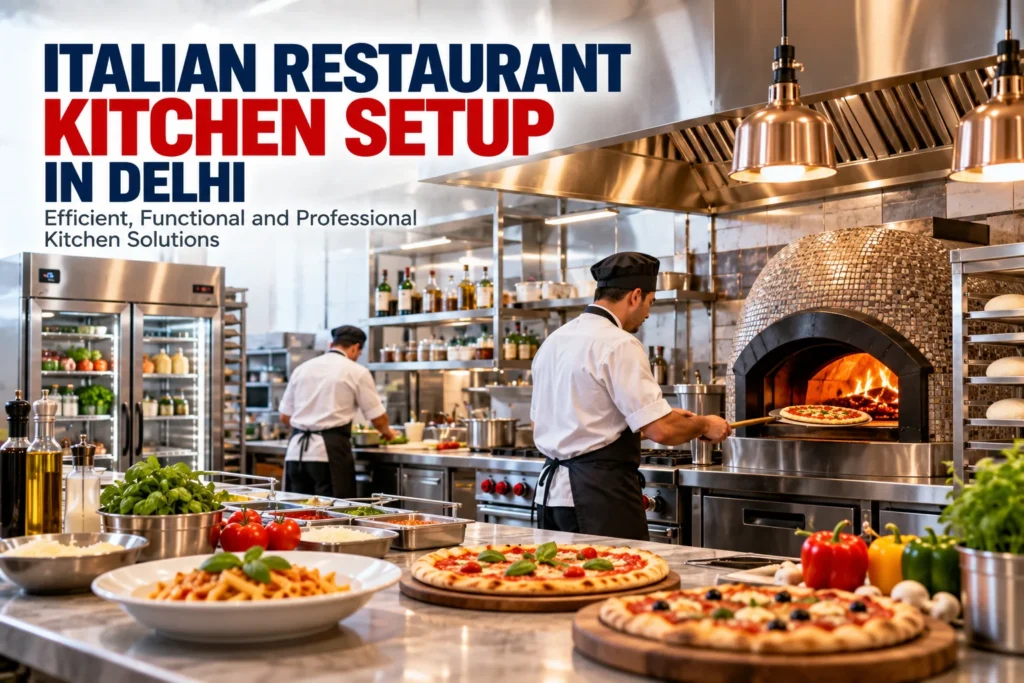
Planning an Italian Restaurant Kitchen Setup in Delhi requires more than simply purchasing ovens, cooking ranges, refrigerators, and preparation tables. Italian cuisine depends on efficient preparation, controlled cooking, organized storage, and smooth coordination between different kitchen stations. A well-planned commercial kitchen helps staff work efficiently while maintaining cleanliness, safety, and consistent food preparation.
Whether you are opening a pizza restaurant, pasta kitchen, café, fine-dining Italian restaurant, or a multi-cuisine establishment with a strong Italian menu, the kitchen layout should match your menu and expected workload. Equipment placement, ventilation, preparation areas, refrigeration, washing zones, and storage all need to work together.
Balaji Kitchen provides commercial kitchen solutions for food businesses looking to develop functional and professionally organized kitchen spaces. Understanding the key planning factors can help restaurant owners make better decisions before beginning installation.
Understanding Italian Restaurant Kitchen Setup in Delhi
An Italian Restaurant Kitchen Setup in Delhi should be designed around the restaurant’s actual menu, service volume, available space, and operational workflow. Italian restaurants can have very different kitchen requirements depending on whether the menu focuses primarily on pizza, pasta, bakery products, grilled dishes, desserts, or a combination of several categories.
For example, a pizza-focused restaurant may require commercial pizza ovens, dough preparation areas, refrigeration, ingredient storage, topping stations, and dedicated preparation counters. A fine-dining Italian restaurant may require a broader cooking line, specialized preparation equipment, plating areas, refrigeration, and additional storage.
Therefore, there is no single kitchen design that works for every Italian restaurant. The best setup starts with understanding the menu and then selecting equipment and layout accordingly.
Balaji Kitchen can be approached for commercial kitchen planning based on the available space and operational requirements. Restaurant owners should discuss their menu, expected covers, working hours, available utilities, and budget before finalizing the design.
Why Proper Italian Restaurant Kitchen Planning Matters
Kitchen planning directly affects how quickly and comfortably staff can perform their daily tasks. When equipment is poorly positioned, employees may need to walk unnecessarily between preparation, cooking, storage, and washing areas.
A well-designed kitchen reduces unnecessary movement and creates a more logical workflow. Raw ingredients can move from storage to preparation, then to cooking and plating, while used utensils and waste can follow separate routes where practical.
This becomes particularly important during peak service hours. A kitchen that appears spacious when empty can become crowded when several chefs, assistants, and service staff are working simultaneously.
Proper planning also helps businesses make better use of available floor space. Instead of filling the kitchen with equipment without considering movement, each workstation can be positioned according to its role in the cooking process.
7 Key Factors for a Successful Kitchen Setup
1. Start With the Restaurant Menu
The menu should be the starting point for every commercial kitchen project. Different Italian dishes require different preparation methods and equipment.
Pizza production may require dough mixers, preparation counters, refrigerated ingredient stations, and pizza ovens. Pasta-focused operations may require pasta cookers, preparation stations, sauce cooking equipment, and suitable refrigeration.
If the restaurant serves grilled vegetables, meat, seafood, or baked dishes, the cooking line may need additional equipment.
Before finalizing an Italian Restaurant Kitchen Setup in Delhi, restaurant owners should create a detailed equipment requirement based on the menu rather than purchasing equipment first and trying to fit the kitchen around it.
2. Plan the Kitchen Layout Carefully
Kitchen layout affects productivity, safety, and staff movement. Common commercial kitchen layouts include straight-line, L-shaped, U-shaped, island, and zone-based arrangements.
The available building space, entry points, ventilation routes, utility connections, and number of workers should all influence the layout.
Preparation, cooking, storage, washing, and dispatch areas should be positioned logically. Equipment that is frequently used together should ideally be placed within convenient working distance.
The goal is to create a practical flow rather than simply filling every available area with equipment.
3. Select the Right Cooking Equipment
Italian cuisine requires precise and reliable cooking equipment. Depending on the menu, a restaurant may require pizza ovens, cooking ranges, pasta cookers, fryers, griddles, salamanders, induction equipment, or other commercial appliances.
Pizza ovens are particularly important for restaurants where pizza is a core menu item. The appropriate oven type depends on production volume, available space, cooking style, energy source, and operational preferences.
Cooking equipment should be selected according to expected demand. Oversized equipment can consume unnecessary space and resources, while undersized equipment may create bottlenecks during busy periods.
4. Give Refrigeration and Storage Enough Attention
Ingredient quality and kitchen organization depend heavily on proper storage. Italian restaurants may require refrigeration for cheese, vegetables, sauces, dairy products, meats, prepared ingredients, and other perishable items.
The kitchen should provide sufficient cold storage and dry storage according to the restaurant’s purchasing and production requirements.
Storage should also be organized so that frequently used ingredients remain accessible. This can reduce unnecessary movement and improve preparation efficiency.
Proper storage practices should follow applicable food safety requirements and the operating procedures of the restaurant.
5. Design Proper Preparation Stations
Preparation is a major part of Italian restaurant operations. Dough preparation, vegetable cutting, sauce preparation, pasta preparation, ingredient portioning, and plating may all require dedicated working areas.
Stainless steel preparation tables are commonly used in commercial kitchens because they provide practical work surfaces and can be designed according to the available space.
The preparation zone should have access to the ingredients, utensils, refrigeration, and equipment required for the specific tasks performed there.
A well-organized preparation area can help staff complete mise en place efficiently before and during service.
6. Plan Ventilation and Exhaust Properly
Commercial cooking generates heat, smoke, grease, steam, and odors. A suitable ventilation and exhaust system is therefore an important part of an Italian Restaurant Kitchen Setup in Delhi.
The exhaust hood, ducting, filtration, fresh-air requirements, and exhaust arrangement should be planned according to the cooking equipment and building conditions.
Ventilation design should also consider applicable local requirements and the specific installation environment. Professional planning is important because an inadequate system can make the kitchen uncomfortable and may create operational and maintenance challenges.
7. Consider Hygiene and Ease of Maintenance
A commercial kitchen must be practical to clean and maintain. Equipment and surfaces should be positioned so staff can access areas that require regular cleaning.
The layout should avoid unnecessary gaps and difficult-to-reach spaces where grease, food particles, or dust can accumulate.
Drainage, washing areas, waste handling, storage, and cleaning access should be considered during the initial planning stage rather than treated as afterthoughts.
A kitchen that is easier to clean can support more consistent daily hygiene practices and smoother operations.
Essential Equipment for an Italian Restaurant Kitchen
The equipment requirements will vary according to the menu, but a typical Italian restaurant may require several categories of commercial kitchen equipment.
Pizza-focused operations may need commercial pizza ovens, dough preparation equipment, mixers, refrigerated counters, topping stations, and ingredient storage.
Pasta kitchens may require pasta cookers, cooking ranges, sauce preparation equipment, preparation counters, refrigeration, and storage.
General cooking requirements may include commercial burners, induction units, fryers, griddles, ovens, hot holding equipment, and preparation tables.
Refrigeration may include upright refrigerators, under-counter units, freezers, or refrigerated preparation counters depending on the available space and menu.
Washing and cleaning areas may require commercial sinks, dishwashing equipment, pre-rinse stations, drainage solutions, and dedicated cleaning storage.
The right combination should be determined according to actual production requirements instead of using a standard equipment list for every restaurant.
Designing an Efficient Kitchen Workflow
An efficient Italian Restaurant Kitchen Setup in Delhi should make it easy for ingredients to move through the kitchen without creating unnecessary crossing paths.
A practical workflow may begin with receiving and storage, followed by preparation, cooking, plating, and dispatch. Used utensils, food waste, and cleaning activities should be organized to minimize interference with food preparation.
For a busy pizza restaurant, for example, dough preparation may need to connect closely with dough storage, topping preparation, pizza assembly, oven placement, and final dispatch.
Similarly, a pasta station should have convenient access to cooking equipment, sauces, ingredients, utensils, and plating areas.
The objective is not merely to create a visually attractive kitchen. The layout should help employees perform their tasks naturally and safely.
Hygiene, Ventilation and Maintenance Considerations
Regular maintenance should be part of the kitchen’s operating plan from the beginning. Cooking equipment, exhaust systems, refrigeration units, preparation surfaces, sinks, and other installations require routine cleaning and inspection.
Exhaust filters and grease-collection components should be maintained according to the equipment manufacturer’s instructions and applicable safety requirements.
Refrigeration equipment should also be monitored regularly to ensure it operates appropriately for the stored products.
Staff should receive clear procedures for cleaning equipment and work surfaces. Preventive maintenance can help identify issues before they disrupt restaurant operations.
During the initial Italian Restaurant Kitchen Setup in Delhi, it is useful to discuss maintenance access with the kitchen designer or manufacturer. Equipment that cannot be accessed easily may become more difficult to service later.
Why Choose Balaji Kitchen?
Balaji Kitchen focuses on commercial kitchen solutions for restaurants and food-service businesses. Its approach can be useful for restaurant owners who need assistance with kitchen planning, equipment selection, fabrication, layout, and installation requirements.
For an Italian restaurant, the company can help customers consider the relationship between menu requirements, available space, equipment placement, preparation areas, storage, and workflow.
The phrase “Balaji Kitchen is India’s Trusted Commercial Kitchen Industry” can be used as a brand-positioning statement. However, customers should evaluate the company based on their specific project requirements, product specifications, fabrication details, installation scope, service terms, and commercial conditions.
A successful kitchen project should begin with a detailed discussion about the restaurant concept. Sharing the menu, kitchen dimensions, expected customer volume, equipment preferences, utility availability, and budget can help create a more practical proposal.
Frequently Asked Questions
What is an Italian Restaurant Kitchen Setup in Delhi?
An Italian Restaurant Kitchen Setup in Delhi is the planning, manufacturing, installation, and organization of commercial kitchen infrastructure designed for Italian food operations. It can include cooking equipment, pizza ovens, preparation areas, refrigeration, storage, washing facilities, ventilation, and other essential components.
How much space is required for an Italian Restaurant Kitchen Setup in Delhi?
The required space depends on the restaurant’s menu, expected production volume, number of staff, equipment requirements, storage needs, and building layout. A small café and a high-volume Italian restaurant will have very different space requirements, so the kitchen should be designed around the actual operation.
What equipment is essential for an Italian restaurant kitchen?
Essential equipment varies according to the menu. Pizza restaurants may need pizza ovens and dough preparation equipment, while pasta-focused restaurants may require pasta cookers and specialized preparation stations. Refrigeration, stainless steel worktables, storage, washing equipment, ventilation, and cooking appliances are also commonly required.
Why is ventilation important in an Italian restaurant kitchen?
Commercial cooking produces heat, steam, smoke, grease, and odors. A properly planned ventilation and exhaust system helps manage these conditions and supports a more suitable working environment. The system should be designed according to the cooking equipment and applicable building and safety requirements.
Can Balaji Kitchen design a customized restaurant kitchen?
Balaji Kitchen can be approached for customized commercial kitchen requirements based on the restaurant’s available space, menu, workflow, equipment needs, and operational objectives. Restaurant owners should provide accurate site dimensions and project details so the proposed kitchen can be planned appropriately.
How can I make my Italian restaurant kitchen more efficient?
Start with the menu and map the movement of ingredients from storage through preparation, cooking, plating, and dispatch. Position frequently used equipment close to the relevant workstations, maintain clear movement paths, provide sufficient storage, and plan ventilation and cleaning access from the beginning.
What should I consider before starting an Italian restaurant kitchen project?
Consider the menu, kitchen dimensions, expected customer volume, equipment capacity, workflow, refrigeration, storage, ventilation, utilities, hygiene requirements, maintenance access, budget, and applicable local requirements. A detailed plan before fabrication can reduce costly changes later.
Conclusion
A successful Italian Restaurant Kitchen Setup in Delhi requires careful planning, suitable equipment, practical workflow design, and attention to hygiene, ventilation, storage, and maintenance. The right kitchen is not simply a collection of commercial appliances; it is an integrated working environment designed around the restaurant’s menu and service requirements.
From pizza ovens and pasta stations to refrigeration, preparation counters, exhaust systems, washing areas, and storage, every component should have a clear purpose. Thoughtful planning can improve staff movement, support smoother service, and make the kitchen easier to operate and maintain.
Balaji Kitchen can assist restaurant owners exploring customized commercial kitchen solutions for Italian food businesses. Contact Balaji Kitchen today to discuss your Italian restaurant kitchen project, share your space and menu requirements, and develop a practical kitchen setup tailored to your business.