
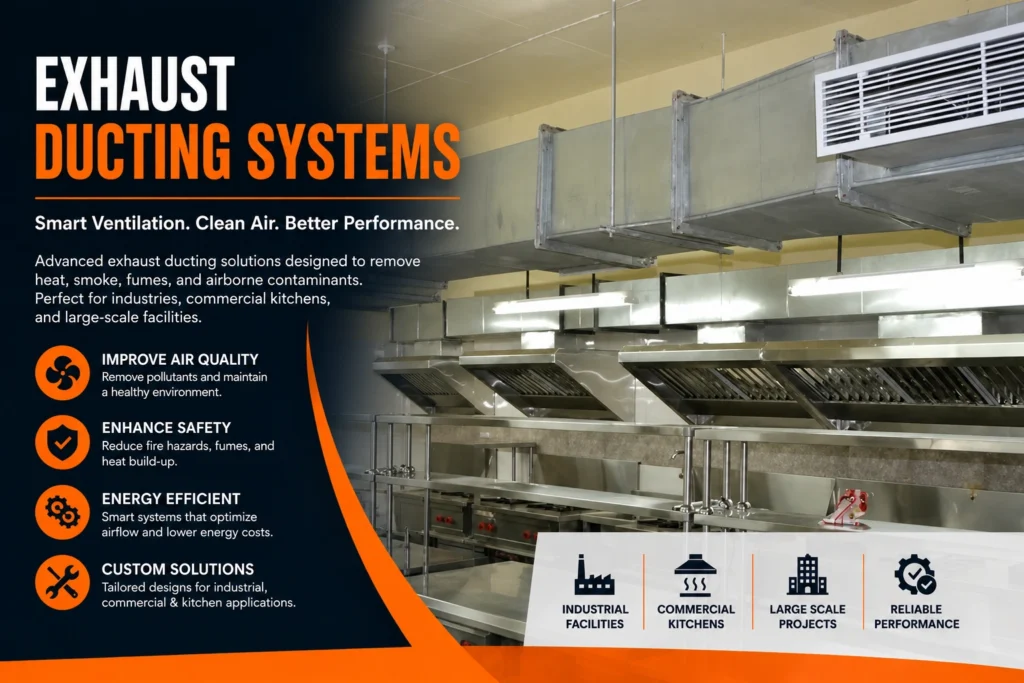
In modern industries and commercial spaces, maintaining clean air and proper ventilation is essential for safety, productivity, and energy efficiency. One of the most important components that supports healthy airflow is the Exhaust Ducting Systems setup. Whether it is a factory, restaurant, warehouse, or manufacturing unit, a well-designed ducting system helps remove smoke, heat, fumes, grease, and airborne contaminants effectively.
Today, businesses are increasingly investing in advanced ventilation technologies to create healthier work environments and meet environmental standards. From a commercial kitchen setup to large-scale industrial plants, proper ducting solutions play a critical role in operational success.
What Are Exhaust Ducting Systems?
Exhaust Ducting Systems are networks of ducts, fans, filters, and vents designed to remove polluted or contaminated air from a building. These systems help maintain indoor air quality by directing harmful particles and excess heat outside the facility.
They are commonly used in:
- Industrial manufacturing units
- Restaurants and hotels
- Commercial kitchens
- Chemical plants
- Warehouses and factories
- HVAC systems
The primary purpose of these systems is to ensure safe airflow and maintain a comfortable indoor environment for workers and customers.
Importance of Proper Ventilation in Industries
Industries generate large amounts of smoke, dust, fumes, and heat during daily operations. Without proper ventilation, these pollutants can negatively impact employee health, machine performance, and overall productivity.
Businesses aiming to Improve Industrial Ventilation often install high-quality exhaust systems to maintain consistent airflow and reduce airborne contamination. Effective ventilation not only enhances workplace safety but also supports compliance with environmental and fire safety regulations.
Some major benefits include:
- Better indoor air quality
- Reduced heat accumulation
- Improved worker comfort
- Enhanced equipment performance
- Lower risk of fire hazards
- Increased operational efficiency
Modern industries understand that investing in ventilation solutions is not just about compliance—it is about creating sustainable and efficient workplaces.
Role of Exhaust Systems in Commercial Kitchens
A well-planned commercial kitchen setup requires efficient ventilation to handle smoke, grease, steam, and cooking odors. Restaurants, hotels, and food processing units rely heavily on exhaust ducting systems to maintain hygiene and safety standards.
In commercial kitchens, exhaust systems help by:
- Removing excess heat from cooking areas
- Controlling grease buildup
- Eliminating smoke and odors
- Maintaining fresh airflow
- Improving employee comfort
Without proper ducting, kitchens can become uncomfortable and unsafe, affecting both staff productivity and customer experience. A professionally designed ventilation system ensures smooth kitchen operations and compliance with health regulations.
Key Components of Exhaust Ducting Systems
An effective exhaust system consists of several important components working together efficiently.
1. Ducts
Ducts are the channels that carry contaminated air outside the building. They are usually made from galvanized steel, aluminum, or stainless steel.
2. Exhaust Fans
Fans create the airflow needed to move polluted air through the duct network.
3. Filters
Filters capture grease, dust, and harmful particles before air is released outside.
4. Dampers
Dampers regulate airflow and prevent backflow inside the system.
5. Hoods
Hoods collect smoke, heat, and fumes directly from the source, especially in kitchens and industrial workstations.
Each component plays a vital role in maintaining system efficiency and long-term performance.
How Smart Exhaust Ducting Solutions Are Transforming Industries
Technology has significantly improved ventilation systems over the years. Businesses are now adopting Smart Exhaust Ducting Solutions to enhance performance, reduce energy consumption, and improve monitoring capabilities.
These smart systems use automation and advanced sensors to optimize airflow according to operational requirements. Features often include:
- Automated airflow control
- Energy-efficient fan systems
- Real-time monitoring
- Reduced maintenance costs
- Improved air quality management
With rising energy costs and environmental concerns, smart ducting technology has become an ideal choice for modern facilities.
Industries looking to Improve Industrial Ventilation are increasingly choosing intelligent systems that offer both sustainability and operational efficiency.
Factors to Consider Before Installation
Before installing an exhaust ducting system, businesses should evaluate several factors to ensure maximum performance.
Space Requirements
The layout and size of the facility determine the type and capacity of the system required.
Airflow Capacity
Proper airflow calculations are essential to maintain effective ventilation.
Material Selection
Choosing durable and corrosion-resistant materials increases system lifespan.
Compliance Standards
Systems should comply with local safety and environmental regulations.
Maintenance Accessibility
Easy access for cleaning and maintenance improves long-term efficiency.
A professional assessment helps businesses select the right ducting solution based on operational needs.
Maintenance Tips for Long-Term Efficiency
Regular maintenance is essential to keep exhaust systems functioning properly. Poor maintenance can reduce airflow efficiency and increase operational risks.
Here are some important maintenance tips:
- Clean ducts and filters regularly
- Inspect fans and motors for wear
- Check for leaks or blockages
- Monitor airflow performance
- Schedule professional servicing periodically
For a commercial kitchen setup, frequent cleaning is especially important to prevent grease accumulation and fire hazards.
Proper maintenance not only extends equipment life but also ensures continuous operational efficiency.
Conclusion
Efficient ventilation is essential for every industrial and commercial facility. High-quality Exhaust Ducting Systems help maintain clean air, improve workplace safety, and enhance operational performance. Whether it is a manufacturing plant or a modern commercial kitchen setup, the right ventilation solution can significantly improve productivity and comfort.
As industries continue to evolve, businesses are increasingly adopting Smart Exhaust Ducting Solutions to meet modern efficiency and sustainability standards. Companies looking to Improve Industrial Ventilation should invest in professionally designed systems that offer long-term reliability, energy savings, and superior air quality.
A well-maintained exhaust ducting system is not just an infrastructure investment—it is a step toward a safer, healthier, and more efficient future.